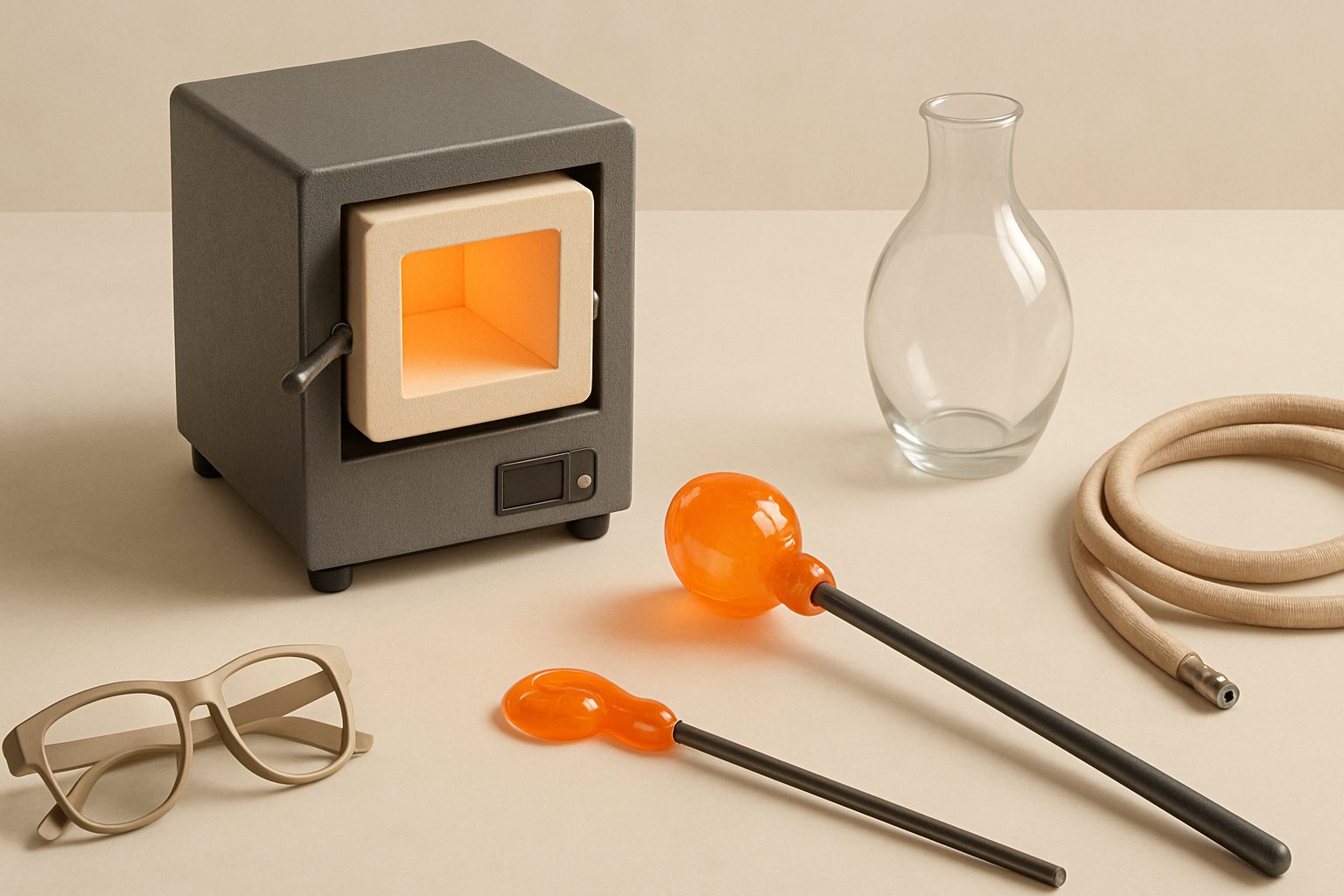
Glass Kiln Starter Kits in the UK — Everything You Need to Begin
Getting into glassblowing at home is more accessible than many assume, but a starter kit does more than just provide a kiln—it establishes the foundation for your entire practice. Whether you're drawn to fusing, slumping, or annealing your own glass work, the right bundle saves you money, time, and the frustration of buying bits piecemeal and discovering you've missed something essential.
What Actually Comes in a Starter Kit?
A decent glass kiln starter bundle includes far more than just the kiln itself. The core package covers:
- The kiln — typically a small electric kiln (6–15 litres), capable of reaching 800–1100°C depending on the model
- Kiln shelf — essential ceramic or fibreboard to protect the base from glass marks and pooling
- Shelf supports or posts — spacers that let you use multiple shelves or adjust height for different projects
- Glass cutter — a basic wheeled or pistol-grip cutter for scoring and snapping sheet glass
- Fusing glass samples or assorted offcuts — enough to begin experimenting without buying full sheets straight away
Some kits also bundle in kiln wash (a refractory coating to protect shelves), firing schedules printed or digital, or basic safety equipment like heat-resistant gloves.
Why Bundling Matters for Budget
Buying separately costs more. A mid-range electric kiln alone runs £400–800. Add a kiln shelf (£30–60), posts (£15–40), a decent glass cutter (£20–50), and safety gear, and you've quickly spent £500–1000 before you've purchased a single sheet of glass.
Kits priced at £600–900 often knock 15–25% off the combined retail cost. That saving buys your initial stock of sheet glass or covers your first few months of electricity costs—both things you'll need immediately.
However, not all bundles offer equal value. Some cheaper kits pair an undersized kiln with poor-quality accessories. A kiln that can't reach fusing temperatures (around 800°C) limits what you can make. Similarly, a flimsy glass cutter frustrates more than it helps.
Kiln Size and What It Means
Starter kits typically come in two sizes: small (6–8 litres) and medium (12–15 litres).
Small kilns heat faster, cost less to run, and fit narrow spaces. They're good for small panels, jewellery, or experimental work. The trade-off is they fill quickly; a single project might claim your entire shelf space for a firing.
Medium kilns offer flexibility. You can fire multiple smaller pieces or one substantial panel. They take longer to heat and cool—important for annealing cycles, which must be slow to prevent glass cracking—but they're more forgiving of batch work.
For most home hobbyists, a medium kiln is the smarter choice. It rarely feels limiting once you start, whereas a small kiln often feels cramped within months.
Beyond the Kiln: What Else You Need
A starter kit gets you 80% there, but a few additions are worth budgeting for:
Kiln wash or batt wash — Most kits include this or assume you'll buy it separately. It's inexpensive (£10–20 per litre) and essential; it prevents glass from fusing to your shelf.
Digital controller or pyrometer — Some kits include a simple controller; others assume you'll use the kiln's built-in thermostat. A pyrometer (temperature display) costs £25–60 and removes guesswork from firing schedules.
Safety glasses or face shield — Not always included. You need proper protection against infrared and UV when the kiln door opens. £15–40 buys proper kiln-safe eyewear.
Annealing schedules — Printed or digital guides specific to your kiln model. They're sometimes included; otherwise, free PDFs exist online, but a kit-specific schedule is worth having.
Glass stock — Budget separately. A starter pack of mixed-colour fusing glass (enough for several small pieces) costs £30–60.
UK-Specific Considerations
Electricity supply. Most home kilns run on standard 13-amp UK plugs, but larger models may need dedicated circuits. Check your installation before buying; a kiln regularly tripping the electrics wastes firing time and can damage the element.
Space and ventilation. Even a small kiln generates heat and occasionally sulphur compounds (from borosilicate glass). A garage, workshop, or well-ventilated shed is ideal. A kitchen is not. Allow at least 30 cm clearance on all sides.
Local regulations. Some council insurance or building regulations affect home workshops, especially if you run a side business. Worth a quick check, though hobbyist glass work rarely triggers concerns.
Kits vs. Building Your Own
If you're methodical and willing to research component compatibility, buying separately can be slightly cheaper. You'll also have more choice in kiln brand or shelf material.
But kits solve a real problem: they eliminate guesswork. Components are tested together. Shelf sizes match the kiln interior. The supplier assumes responsibility for missing or incompatible parts. For a first-time buyer, that peace of mind is worth paying a small premium.
Making the Choice
Look for kits that include:
- A kiln reaching at least 800°C
- A proper ceramic or fibreboard shelf (not thin cardboard)
- Metal posts, not just spacers
- A glass cutter with actual instructions
- A kiln controller or clear guidance on temperature monitoring
- Access to a firing schedule for your specific kiln
Avoid kits bundling obviously cheap components just to inflate the component count. A £200 kiln paired with a glass cutter from a pound shop isn't a bargain; it's a false economy.
Most reputable UK suppliers offer 1–2 year warranties and post-sale support. That matters more than saving £50 on a suspect bundle from an unclear source.
Once you've fired your first piece—watching molten glass transform from a flat sheet into glossy, fused colour—you'll understand why the kiln itself is just the starting point. A good starter kit removes obstacles so you can focus on learning.
More options
- Paragon Kilns (Glass & Jewellery Range) (Amazon UK)
- Skutt Glass Kilns (Amazon UK)
- Digital Kiln Controllers & Pyrometers (Amazon UK)
- Glass Fusing Supplies & Kiln Furniture (Amazon UK)
- Lampworking & Glassblowing Tools (Amazon UK)